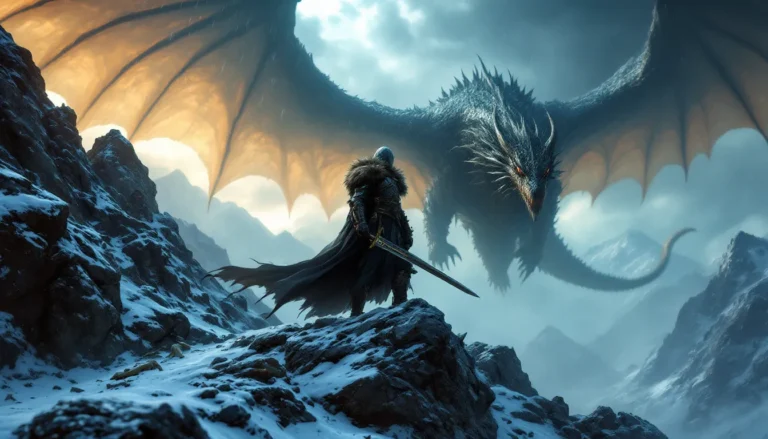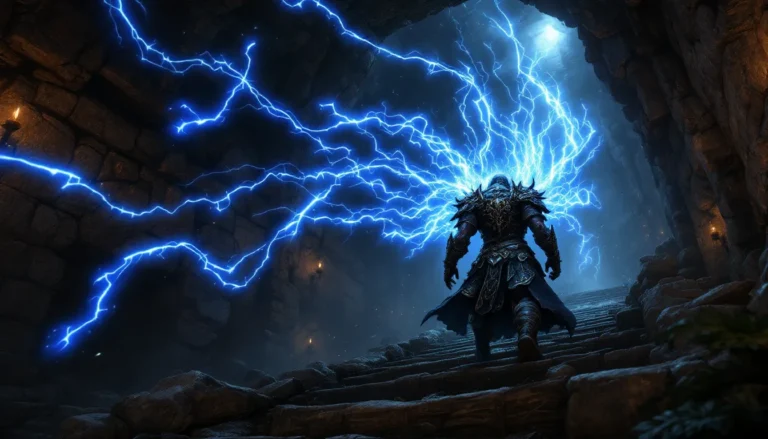

The dragon language in Skyrim isn’t just background flavor, it’s the backbone of the game’s power system and one of Bethesda’s most ambitious worldbuilding achievements. Every time a Dragonborn unleashes Fus Ro Dah or absorbs a dragon soul, they’re interacting with a fully constructed language that took years to develop. Dovahzul, the tongue of dragons, features its own grammar rules, alphabet, and vocabulary that extends far beyond the twenty shouts players unlock during their adventure.
Understanding the dragon language transforms how players experience Skyrim. Word Walls scattered across the province tell stories in ancient script, dragon dialogues carry hidden meanings, and even NPC remarks about the Greybeards gain new depth when someone knows what those distant chants actually mean. Whether someone’s hunting down every shout location, roleplaying as a lore-obsessed scholar, or just curious why Paarthurnax talks the way he does, diving into Dovahzul reveals layers most players miss on their first, or fifth, playthrough.
Table of Contents
ToggleKey Takeaways
- Skyrim’s dragon language, Dovahzul, is a fully constructed language with its own grammar rules, alphabet of 34 runes, and vocabulary that functions as the mechanical foundation for all shouts and player progression.
- Every shout consists of three Words of Power that can be discovered at Word Walls across Skyrim and unlocked by spending dragon souls, creating a gameplay loop tied directly to exploration and combat.
- Understanding Dovahzul reveals hidden depth in dragon encounters and NPC dialogue, transforming how players experience story moments like Alduin’s resurrection spell “Slen Tiid Vo” (Flesh Time Undo) and Paarthurnax’s formal greetings.
- The dragon language prioritizes concepts and power over grammatical complexity, using minimal verb conjugation and contextual meaning rather than temporal precision—a structure that reflects dragons’ immortal perspective on existence.
- Dovahzul transcended the game to become a cultural phenomenon, inspiring fan translations, linguistic studies, tabletop RPG adaptations, and community resources like Thu’um.org, proving Bethesda created something that genuinely resonates beyond Skyrim itself.
What Is the Dragon Language in Skyrim?
Dovahzul (literally “Dragonvoice”) is the ancient language spoken by dragons and used by the Dragonborn to perform Thu’um, the Voice. Unlike most fantasy game languages that amount to relabeled English, Dovahzul operates as a constructed language with consistent internal logic, similar to Tolkien’s Elvish or Star Trek’s Klingon.
The language serves multiple functions in Skyrim’s design. It’s the mechanical foundation for all shouts, the narrative vehicle for dragon interactions, and a massive environmental storytelling tool through Word Walls and ancient texts. When players encounter dragons like Alduin or Paarthurnax, these creatures speak primarily in Dovahzul with occasional Common Tongue for clarity, a detail that reinforces their alien nature and ancient origins.
The Lore Behind Dovahzul
According to Skyrim’s creation myths, dragons were among the first beings created by the god Akatosh. Their language predates human civilization in Tamriel by thousands of years. Dragons don’t “learn” their language, they know it instinctively, as speaking is synonymous with their very existence. The name of something in Dovahzul is believed to define its true nature: to speak a word with draconic power is to impose will upon reality itself.
Humans learned the dragon language from Paarthurnax during the Dragon War, roughly 4,500 years before the events of Skyrim. The ancient Nords used Thu’um as a weapon against their draconic oppressors, with legendary heroes like Ysgramor’s companions mastering shouts through years of meditation. The Greybeards continue this tradition, spending decades perfecting single words while living in isolation at High Hrothgar.
The Dragonborn represents a unique exception to these rules. As someone with the soul of a dragon in a mortal body, they absorb the knowledge of Dovahzul instinctively when they consume dragon souls, a process that would take normal humans a lifetime of study.
How the Dragon Language Works in Gameplay
Every shout in Skyrim consists of three Words of Power. Players discover these words by finding Word Walls, ancient stone monuments carved with dragon script. Reading a Word Wall teaches the player one word, but that word remains “locked” until they spend a dragon soul to unlock its power.
The three-word structure creates a natural progression system. Unrelenting Force, for example, consists of:
- Fus (Force) – A mild stagger
- Fus Ro (Force Balance) – A stronger knockback
- Fus Ro Dah (Force Balance Push) – The iconic full-power shout that sends enemies flying
Each additional word multiplies the effect and extends the cooldown. Most players discover 2-3 shouts naturally through the main questline, but Skyrim hides 20 complete shouts across 78 Word Walls scattered throughout the province. The open-world exploration and combat tactics reward players who venture off the beaten path to ancient Nordic ruins and mountaintop shrines.
Understanding the Dragon Alphabet and Script
The dragon alphabet consists of 34 unique runes, each representing a specific sound in Dovahzul. Bethesda’s art team designed the script to look simultaneously ancient and alien, angular shapes that suggest claw marks on stone, with a symmetry that implies deliberate design rather than primitive scratching.
Dragon Runes and Their Meanings
Each rune in the dragon alphabet corresponds to a phonetic sound rather than a complete concept, though some runes carry symbolic weight beyond their pronunciation. The alphabet includes:
- Standard consonants (B, D, F, G, etc.)
- Vowels (A, E, I, O, U) with distinct glyphs
- Special characters for sounds like TH, EY, and AA
- No lowercase variations, all runes are “uppercase”
Dragon script reads left to right, similar to English, but with no spaces between words. Context and knowledge of vocabulary determine where one word ends and another begins. Word Walls typically feature three prominent runes representing the Word of Power, with smaller surrounding text providing context, history, or poetic elaboration.
The runes themselves don’t scale to difficulty or power level. A simple word like Yol (Fire) uses the same runic style as complex phrases, though Word Walls for more obscure shouts tend to appear in harder-to-reach or more dangerous locations.
How to Read Dragon Writing on Word Walls
When approaching a Word Wall, the glowing rune in the center represents the Word of Power the player hasn’t learned yet. The surrounding text tells a story related to that word, often a historical account of ancient heroes who used the shout, or a philosophical meditation on the concept the word represents.
For example, the Word Wall teaching Zul (Voice) in Shriekwind Bastion contains text that translates roughly to: “Here lies the warrior whose Voice was silence, who conquered with whisper and fell with a roar.” These inscriptions rarely provide gameplay tips but add significant depth to Skyrim’s environmental storytelling.
Players can interact with Word Walls by approaching them and holding the activate button. The camera focuses on the glowing rune, draconic chanting fills the air, and the word etches itself into the Dragonborn’s consciousness. The effect is deliberately dramatic, a reminder that this isn’t just picking up loot, but absorbing ancient power directly into one’s being.
Grammar and Structure of Dovahzul
Dovahzul’s grammar diverges significantly from English, reflecting the alien mindset of dragons. The language prioritizes concepts and power over temporal precision or emotional nuance, fitting for immortal beings who view centuries as humans view seasons.
Word Order and Sentence Construction
Dovahzul typically follows a Subject-Verb-Object (SVO) structure, similar to English, but word order is more flexible due to context clues embedded in the vocabulary itself. Many dragon words carry implicit grammatical information:
- Dovahkiin – Dragonborn (literally “Dragonhunter-born”)
- Drem Yol Lok – Peace Fire Sky (a formal greeting meaning “peace, greetings”)
- Zu’u Alduin – I am Alduin (first-person declaration)
Dragons rarely use articles like “the” or “a.” The concept of definiteness is either understood from context or considered irrelevant. Possessives are indicated by compound words rather than separate possessive pronouns: Dovahkiin combines “Dovah” (dragon) with “kiin” (born), creating an inherent ownership concept.
Sentences can be remarkably short. When Paarthurnax says “Drem Yol Lok” upon first meeting the player, he’s using a three-word phrase that encompasses greeting, acknowledgment of presence, and wish for peaceful intent, concepts that would require a full sentence in English.
Verb Conjugation and Tenses
Dovahzul has minimal verb conjugation compared to real-world languages. Verbs don’t change form based on subject or plurality, and tense is often implied by context rather than verb modification. Dragons, being immortal, have a fundamentally different relationship with time than mortals.
When specific temporal precision is needed, dragons use modifier words:
- Lost indicates past tense (“did” or “was”)
- Fen indicates future tense (“will”)
- Ni creates negation (“not”)
For example:
- Zu’u Dovahkiin – I am Dragonborn
- Zu’u lost Dovahkiin – I was Dragonborn
- Zu’u fen Dovahkiin – I will be Dragonborn
- Zu’u ni Dovahkiin – I am not Dragonborn
The simplicity makes sense given that Thu’um derives power from meaning and intent rather than grammatical precision. When Alduin shouts “Slen Tiid Vo.” (Flesh Time Undo) to resurrect a dragon, the meaning couldn’t be clearer even though the lack of articles or helping verbs.
Common Dragon Words and Phrases Every Player Should Know
Learning key vocabulary transforms dragon encounters from subtitled spectacle to meaningful dialogue. Many dragons make threats or philosophical statements that carry more weight when players understand the actual words being spoken.
Essential Vocabulary for Shouts
Every shout word represents a fundamental concept in dragon philosophy. Understanding these meanings adds context to why certain word combinations create specific effects:
Offensive concepts:
- Yol – Fire
- Fo – Frost
- Zun – Weapon
- Zul – Voice
- Tiid – Time
- Krii – Kill
Defensive and utility concepts:
- Feim – Fade
- Lok – Sky
- Strun – Storm
- Wuld – Whirlwind
- Zii – Spirit
- Mul – Strong
Foundational words:
- Fus – Force
- Ro – Balance
- Dah – Push
The most famous shout, Fus Ro Dah, literally means “Force Balance Push”, a conceptual combination that creates overwhelming kinetic energy. Players mastering advanced techniques learn to anticipate shout effects based on the individual words’ meanings rather than just memorizing what each shout does.
Greetings, Insults, and Dragon Dialogue
Dragons use formal language even when being contemptuous. Common phrases players encounter include:
Greetings and acknowledgments:
- Drem Yol Lok – Peace Fire Sky (formal greeting)
- Zu’u – I/me
- Hi/Hin – You/your
- Pruzah – Good
Insults and threats:
- Joor – Mortal (dismissive term)
- Dovahkiin – Dragonborn (used with varying degrees of respect/contempt)
- Sahrot – Mighty (can be sincere or sarcastic)
- Mey – Fool
When Alduin first appears at Helgen, his shout of “Slen Tiid Vo.” isn’t just a resurrection spell, it’s a declaration of his power over flesh and time itself. Similarly, when dragons taunt the player with “Hin sil fen nahkip bahloki.” (“Your soul will feed my hunger.”), they’re using formal grammatical construction even though the violent intent.
During the peace council at High Hrothgar, if players choose to negotiate with Paarthurnax present, the dragons engage in ritual verbal sparring using formal Dovahzul. These exchanges carry weight beyond their subtitles because dragons conducting diplomacy in their native tongue is treated as inherently more binding than negotiations in the Common Tongue.
All Dragon Shouts and Their Translations
Skyrim features 20 complete shouts plus 3 dragon-exclusive shouts players can’t learn. Each shout’s name in the Common Tongue is a rough approximation of its Dovahzul meaning, though direct translation often reveals nuances the English names miss.
Offensive Shouts Breakdown
Unrelenting Force – Fus Ro Dah (Force Balance Push)
The iconic shout. Sends targets flying backward with increasing power per word. Third word can stagger dragons mid-flight.
Fire Breath – Yol Toor Shul (Fire Inferno Sun)
Exhales dragon fire. Damage scales significantly with all three words, setting entire groups ablaze.
Frost Breath – Fo Krah Diin (Frost Cold Freeze)
Counterpart to Fire Breath. Slows and damages enemies with frost.
Dragonrend – Joor Zah Frul (Mortal Finite Temporary)
Forces flying dragons to land by imposing mortality upon them. Story-exclusive shout learned during the main quest. Cannot be used on NPCs, only dragons are affected by this existential weapon.
Disarm – Zun Haal Viik (Weapon Hand Defeat)
Rips weapons from opponents’ hands. Devastatingly effective in the hands of dedicated combat specialists fighting weapon-dependent enemies.
Marked for Death – Krii Lun Aus (Kill Leech Suffer)
Reduces target’s armor rating by 75 points per second for 60 seconds, stacking with each use. Turns dragons into paper when fully applied.
Soul Tear – Rii Vaaz Zol (Essence Tear Zombie)
Dawnguard DLC exclusive. Steals life force, damages health, and reanimates weak enemies. Requires all three words from separate soul cairn locations.
Storm Call – Strun Bah Qo (Storm Wrath Lightning)
Summons a lightning storm. Indiscriminate, hits friends and foes. Dragons caught in Storm Call take continuous damage.
Dismay – Faas Ru Maar (Fear Run Terror)
Fears targets up to level 99 when fully unlocked. Most powerful crowd control in vanilla Skyrim.
Defensive and Utility Shouts Breakdown
Become Ethereal – Feim Zii Gron (Fade Spirit Bind)
Grants complete invulnerability but prevents attacking. Used by speedrunners to survive massive falls without damage.
Whirlwind Sprint – Wuld Nah Kest (Whirlwind Fury Tempest)
Rapid forward dash. Essential for platforming puzzles and dodging dragon breath attacks.
Clear Skies – Lok Vah Koor (Sky Spring Summer)
Dispels weather effects. Required during the main quest to reach Paarthurnax and clear Alduin’s mist at Sovngarde.
Aura Whisper – Laas Yah Nir (Life Seek Hunt)
Reveals all nearby life forms through walls. Superior to Detect Life spells with longer range.
Elemental Fury – Su Grah Dun (Air Battle Grace)
Increases weapon swing speed by 30% per word for 15 seconds. Doesn’t work with enchanted weapons in vanilla Skyrim, a deliberate balance decision according to developer interviews with IGN.
Ice Form – Iiz Slen Nus (Ice Flesh Statue)
Encases target in ice, paralyzing them for 15-60 seconds depending on words used.
Slow Time – Tiid Klo Ul (Time Sand Eternity)
Slows time by 90% for 16 seconds with all three words. Overpowered in the right builds, allowing archers to land multiple shots before enemies react.
Throw Voice – Zul Mey Gut (Voice Fool Far)
Projectile distraction. Causes enemies to investigate the impact location. Popular with stealth builds.
Kyne’s Peace – Kaan Drem Ov (Kyne Peace Trust)
Pacifies nearby animals. Highly situational but makes bear and wolf encounters trivial.
Battle Fury – Mid Vur Shaan (Loyal Valor Inspire)
Dragonborn DLC exclusive. Grants allies 20% increased attack speed and 10% melee damage for 60 seconds.
Bend Will – Gol Hah Dov (Earth Mind Dragon)
Dragonborn DLC exclusive. Tames dragons, allowing players to ride them. Also controls other targets when fully unlocked.
Cyclone – Ven Gaar Nos (Wind Unleash Strike)
Dragonborn DLC exclusive. Creates a small tornado that throws enemies upward.
How to Learn and Unlock Dragon Shouts
The progression system for shouts creates a gameplay loop distinct from traditional RPG magic systems. Players can’t purchase or craft shouts, they must explore the world and hunt dragons to gain power, reinforcing the Dragonborn’s predatory nature.
Finding Word Walls Across Skyrim
Word Walls appear in several categories of locations:
Main quest locations (unavoidable):
- Bleak Falls Barrow – Fus (Unrelenting Force)
- High Hrothgar – Ro and Dah (completing Unrelenting Force)
- Skuldafn – Joor, Zah, Frul (Dragonrend)
- Sovngarde – Multiple story-relevant words
Dragon lair locations (40+ scattered across the map):
Most outdoor Word Walls have a named dragon guarding them. These dragons respawn after approximately 10 in-game days, but the Word Wall only teaches its word once per playthrough.
Dungeon locations (usually at the end of Nordic ruins):
These require clearing draugr-infested crypts, solving environmental puzzles, and defeating draugr deathlords or dragon priests.
Hidden and obscure locations:
Several Word Walls require specific questlines, jumping puzzles, or careful environmental observation to discover. The Throw Voice shout, for example, requires venturing deep into the mountains near Shearpoint where both a dragon and the dragon priest Krosis guard it.
Players can expedite Word Wall discovery by interrogating Arngeir at High Hrothgar. After learning a few shouts, he’ll mark the nearest undiscovered Word Wall on the map. This service has a cooldown but eliminates aimless wandering when hunting specific shouts.
Absorbing Dragon Souls to Unlock Shouts
Killing a dragon triggers a dramatic absorption sequence. The dragon’s body remains while its flesh burns away, and streams of light flow into the Dragonborn. The process is involuntary, players can’t choose not to absorb a soul, and signals their fundamental nature as a dragon in mortal form.
Each dragon soul unlocks one word of any known shout. The menu interface shows which shouts have locked words, and players can spend souls immediately or save them for later. There’s no wrong choice, souls are relatively abundant given the number of dragon encounters throughout a standard playthrough.
Dragon soul farming became a meta-strategy for players pursuing 100% completion. Named dragons at lairs respawn, as do random dragon encounters. Players report needing roughly 55-60 dragon souls to unlock every shout in the base game, with additional souls required for DLC shouts.
The absorption mechanic creates an interesting narrative-gameplay synergy. Story-wise, the Dragonborn steals the dragon’s knowledge and power, preventing them from being resurrected by Alduin. Mechanically, it gates shout progression behind combat prowess and exploration rather than skill point investment or gold grinding.
Speaking Dragon Language Like a True Dovahkiin
Some players take Dovahzul seriously enough to study it outside the game, treating it like Klingon or Quenya. The Skyrim community has built substantial resources for those wanting to go beyond in-game knowledge.
Tips for Pronunciation and Accent
Bethesda provided voice actors with pronunciation guides, resulting in relatively consistent delivery throughout the game. Key pronunciation patterns include:
Vowel sounds:
- A sounds like “ah” (as in father)
- E sounds like “eh” (as in set)
- I sounds like “ee” (as in feel)
- O sounds like “oh” (as in soul)
- U sounds like “oo” (as in moon)
Consonant patterns:
- H is always aspirated and prominent
- R is rolled or trilled
- K is hard and sharp
- Z sounds like the English Z (zoo), not S
Stress patterns:
Stress typically falls on the first syllable of each word. DOV-ah-kiin, PAR-thur-nax, AL-du-in. This creates the rhythmic, percussive quality that makes Thu’um sound powerful even without understanding the meaning.
Voiced by the Thu’um:
The in-game shouts layer the player’s voice with additional audio effects, reverb, bass boost, and harmonic overtones, that make simple words sound reality-altering. Fans attempting real-world pronunciation can’t replicate this, though some creative audio engineers have tried using pitch shifters and vocal effects to approximate the sound.
Resources for Learning Dovahzul Outside the Game
The Dovahzul community developed several tools and references:
Thu’um.org (dedicated Dovahzul dictionary and learning resource)
Comprehensive word lists, grammar guides, and community-generated translations. Users can submit their own translations and vote on accuracy.
The Dragon Language Myth and Grammar book (in-game text)
Players can find this book in Skyrim, written in-universe by Hela Thrice-Versed. It provides canonical grammar rules and vocabulary, though it’s necessarily limited compared to fan compilations.
Community translations and writing systems:
Fans have translated everything from song lyrics to literature into Dovahzul. Some create custom fonts for dragon runes, allowing them to write Dovahzul digitally using the actual script.
YouTube pronunciation guides:
Several creators break down phonetics word by word, comparing voice actor delivery from different dragons to establish consistent pronunciation.
Modding community additions:
Certain mods available through Nexus Mods expand Dovahzul content in-game, adding new books written entirely in dragon script, NPCs who speak more Dovahzul, or player dialogue options in the dragon language. These mods appeal to hardcore roleplayers who want their Dragonborn to actually speak like the dragon-souled being they’re supposed to be.
The Cultural Impact of Skyrim’s Dragon Language
Dovahzul transcended Skyrim’s boundaries to become a cultural touchstone, similar to how “Fus Ro Dah” became one of gaming’s most recognizable memes during 2011-2013. The shout appeared in YouTube videos, late-night talk shows, and even other games as a reference or Easter egg.
The attention to detail in creating a functional constructed language elevated Skyrim above typical fantasy RPGs in worldbuilding conversations. Comparing Bethesda’s approach to other games, Dovahzul sits somewhere between The Witcher’s sparse use of Elder Speech and Dragon Age’s extensive Elvish vocabulary. The difference is player engagement, Skyrim made its fantasy language mechanically integral rather than optional flavor text.
Linguistics students and conlang enthusiasts dissected Dovahzul’s structure, debating whether it qualified as a complete language or an advanced cipher. Consensus landed on “sophisticated but incomplete”, Dovahzul has roughly 600-700 canon words compared to natural languages’ tens of thousands, but its grammar and phonology are internally consistent enough to support original composition.
The language’s influence extended into tabletop RPG spaces. Several homebrew Dungeons & Dragons campaigns adapted Dovahzul for Dragonborn characters, and some DMs created entire cultures speaking the language. This crossover demonstrated how effectively Bethesda’s creation captured a sense of draconic authenticity that resonated beyond Skyrim itself.
Cosplayers and convention attendees incorporated Dovahzul into costumes and performances. Dragon priest mask replicas often feature accurate runic inscriptions pulled from in-game assets. Some fans committed to the bit by answering questions in broken Dovahzul during character meet-and-greets, creating memorable interactions for other Elder Scrolls enthusiasts.
Game design courses and writing guides at Twinfinite sometimes reference Dovahzul as an example of integrating constructed languages without overwhelming players. The key insight: make the language mechanically relevant, provide in-world translation, and let curious players dig deeper on their own terms. Not everyone needs to care about grammar rules, but the option should exist for those who do.
Bethesda continued the linguistic tradition with subsequent titles, though nothing matched Dovahzul’s mainstream penetration. The dragon language remains synonymous with Skyrim’s identity fifteen years after release, a testament to how audio design, visual script, and mechanical integration can transform fictional vocabulary into cultural phenomenon.
Conclusion
The dragon language in Skyrim represents more than clever worldbuilding, it’s a core system that ties gameplay, narrative, and player identity together. From the first time someone shouts Fus Ro Dah off the Throat of the World to the moment they ride a tamed dragon across Solstheim, Dovahzul makes players feel genuinely powerful in a way few game mechanics achieve.
Whether someone approaches it as a completionist hunting every Word Wall, a lore scholar translating ancient texts, or a casual player who just thinks “Yol Toor Shul” sounds cool, the dragon language has enough depth to reward engagement at any level. It’s a system that respects player choice, ignorable for those who don’t care, infinitely explorable for those who do.
Fifteen years into Skyrim’s lifespan, the community still discusses Dovahzul’s nuances and creates new content around it. That longevity proves Bethesda built something special, a fantasy language that actually matters to the people who encounter it, rather than set dressing that gets skipped on the second playthrough. The ancient tongue of the Dovahkiin endures, and so does the game that brought it to life.