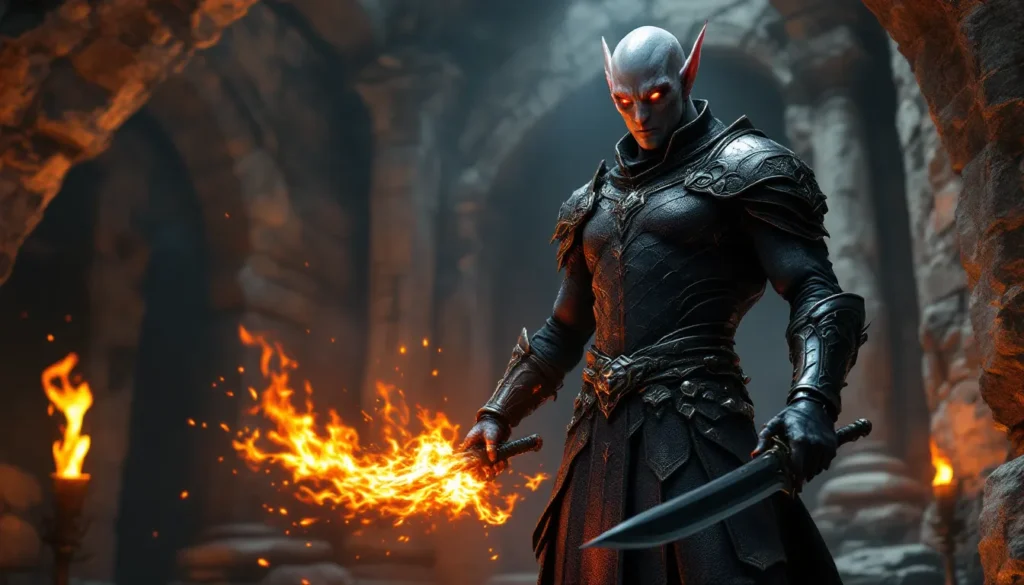

The Dunmer, or Dark Elves, have been kicking around Tamriel for ages, but in Skyrim they’re more than just ash-skinned refugees from Morrowind. They’re versatile, deadly, and perfectly suited for hybrid builds that most other races can’t pull off as cleanly. Whether someone’s planning a fire-slinging battlemage or a sneaky assassin with a magical edge, Dark Elves bring racial bonuses that actually matter beyond the first few hours of gameplay.
What sets them apart? A natural resistance to fire (50% damage reduction, which is huge), a daily power that can turn the tide in tight situations, and skill bonuses in both magic and combat trees. They’re not pigeonholed into one playstyle, which is rare. Most races in Skyrim lean hard in one direction, Orcs for melee, High Elves for pure magic, but Dunmer split the difference without feeling like a compromise.
This guide breaks down everything from racial abilities and starting bonuses to optimal builds, gear, and advanced tactics. By the end, players will know exactly how to leverage Dark Elf strengths, avoid their pitfalls, and build characters that can handle anything from dragon fights to legendary difficulty dungeons.
Table of Contents
ToggleKey Takeaways
- Dark Elves in Skyrim excel at hybrid builds thanks to their versatile skill bonuses, 50% fire resistance, and balanced approach to magic and melee combat that most other races can’t match.
- The Atronach Standing Stone is the endgame pick for nearly any Skyrim Dark Elf build, providing 50% spell absorption that, combined with fire resistance, creates near-invulnerability to magical damage.
- Impact is the single most powerful Destruction perk for Dark Elves, enabling infinite crowd control through dual-cast stagger-locking that works on dragons and legendary difficulty enemies.
- Enchanting and Alchemy are essential for maximizing Dark Elf potential—100% Destruction cost reduction transforms spellcasting into infinite magicka, while Alchemy generates wealth to fund expensive perks and gear.
- Dark Elves’ +5 Sneak bonus and Ancestor’s Wrath power support effective stealth assassin builds that combine silent backstabs with magical versatility unavailable to pure melee races.
- Roleplaying an authentic Skyrim Dark Elf character means joining factions like the Thieves Guild or Dark Brotherhood, supporting the Empire in the civil war, and respecting Daedric worship aligned with Dunmer culture.
What Makes Dark Elves Unique in Skyrim?
Dark Elf Racial Abilities and Passives
Dark Elves come with two key racial traits baked in from the moment they spawn in Helgen:
- Resist Fire (50%): Permanent passive that halves all fire damage. This isn’t a minor convenience, it trivializes dragon encounters (most breathe fire), makes Destruction mages using fire spells less threatening, and shrugs off environmental fire hazards in dungeons like Labyrinthian or Apocrypha.
- Ancestor’s Wrath: A once-per-day power that cloaks the player in flames for 60 seconds, dealing 8 fire damage per second to anyone within melee range. It’s essentially a free AoE DoT that doesn’t cost magicka. Early game, it can save a low-level character surrounded by bandits. Late game, it’s less impactful but still useful for thinning groups without burning spell slots.
The fire resistance alone puts Dunmer in the top tier for survivability. Fire is one of the most common damage types in Skyrim, dragon breath, flame atronachs, pyromancers, and trap runes all get neutered by that 50% reduction.
Starting Skill Bonuses Explained
Dark Elves start with a spread of bonuses that encourage hybrid builds:
- +10 Destruction
- +5 Alchemy, Alteration, Illusion, Light Armor, Sneak
The +10 Destruction is the headline. It means fire spells (which synergize with their fire resistance lore-wise) hit harder from the start, and leveling Destruction to unlock Impact or dual-casting perks happens faster. The +5 in Sneak and Light Armor nudges them toward agile, mobile playstyles rather than heavy armor tank builds.
Alchemy and Alteration bonuses are often overlooked, but Alchemy is one of the most broken skill trees for self-buffing and economy (potions = gold), and Alteration gives access to armor spells like Ebonyflesh, which pairs beautifully with Light Armor or even mage robes. Illusion is niche but opens up pacifist or manipulator playstyles with Calm, Fury, and Invisibility spells.
Unlike High Elves (who get +50 magicka but no combat skills) or Nords (melee-focused with zero magic bonuses), Dark Elves can pivot between spellcasting and weapon combat without feeling gimped. That flexibility is their signature strength.
Best Dark Elf Builds and Playstyles
The Battlemage Build: Combining Magic and Melee
This is the quintessential Dunmer build. It leverages their Destruction bonus and martial skill bumps to create a character who can cast Firebolt with one hand and swing a sword with the other.
Core Skills:
- Destruction (focus fire spells)
- One-Handed (swords or axes)
- Light Armor or Alteration (for defense)
- Enchanting (to sustain magicka and boost damage)
Gameplay Loop: Open fights at range with Destruction spells, then close the gap with a one-handed weapon when enemies get close or magicka runs low. With perks like Impact (stagger on dual-cast Destruction spells) and Dual Flurry (faster dual-wield attacks), the battlemage can control crowds and execute stragglers.
Key Gear: Morokei (dragon priest mask, +100% magicka regen) or Archmage’s Robes if going light on armor. Alternatively, the Dragonscale Armor set offers high defense without the mobility penalties of heavy armor. Pair with enchanted rings and amulets that cut Destruction spell costs by 25% each.
The Stealthy Assassin Build
Dark Elves’ +5 Sneak makes them viable for stealth, and their Destruction bonus adds a magical twist to the typical dagger-in-the-back routine.
Core Skills:
- Sneak
- One-Handed (daggers)
- Illusion (Muffle, Invisibility)
- Destruction (silent ranged kills with spells)
Gameplay Loop: Use Muffle to move silently, then either backstab with a dagger (15x sneak attack multiplier with perks) or snipe enemies with silent Destruction spells from the shadows. Illusion spells like Calm or Frenzy can manipulate groups before going loud. Players who enjoy stealth-focused playstyles often find this the most rewarding approach for Dark Elves.
Key Gear: Dark Brotherhood armor set (double sneak attack damage with gloves), Nightingale Blade, and the Ebony Mail (acquired from Boethiah’s quest) for a poison cloak that stacks with Ancestor’s Wrath.
The Pure Destruction Mage Build
For players who want to go full caster, Dark Elves can absolutely compete with High Elves or Bretons, they just sacrifice some magicka for better survivability against fire damage.
Core Skills:
- Destruction (all elements, but fire is thematic)
- Restoration (healing and wards)
- Alteration (armor spells and magic resistance)
- Enchanting (mandatory for cost reduction)
Gameplay Loop: Spam dual-cast Destruction spells with Impact to stagger-lock enemies. Use wards to block incoming spells and dragon shouts. With 100% cost reduction in Destruction (via enchanted gear), magicka becomes infinite for that school.
Key Gear: Archmage’s Robes, Morokei, and the Spell Absorption perk from Alteration. Stack magicka-boosting enchantments and grab the Aetherial Crown to equip two standing stones at once (usually Atronach + Mage).
Optimal Standing Stone Choices for Dark Elves
Standing Stones are permanent buffs (unless swapped), so picking the right one early matters.
Best Overall: The Atronach Stone
- Effect: +50 magicka, 50% spell absorption, -50% magicka regen.
- Why It Works: The spell absorption is absurd for survivability, especially against mages and dragons. The magicka regen penalty sounds harsh, but it’s negated entirely by enchanting gear for cost reduction or using potions. Dark Elves already have fire resistance: adding spell absorption makes them nearly unkillable by magic.
Early Game: The Mage Stone
- Effect: Magic skills level 20% faster.
- Why It Works: If rushing to unlock key Destruction or Alteration perks, this accelerates the grind. Swap to Atronach once core skills hit 50+.
Hybrid Builds: The Lord Stone
- Effect: +50 armor rating, 25% magic resistance.
- Why It Works: For battlemages wearing light armor or robes, this shores up physical defense without requiring heavy armor perks. Stacks with Alteration armor spells.
Stealth Builds: The Shadow Stone
- Effect: Once-per-day invisibility for 60 seconds.
- Why It Works: A panic button for stealth characters, though Illusion spells do the same thing with more flexibility. Only use if avoiding Illusion perks entirely.
The Atronach Stone is the endgame pick for almost any Dark Elf build. With proper enchanting, the downsides vanish and the upsides are game-breaking. Communities on modding platforms often recommend pairing it with mods that rebalance magic for an even more refined experience.
Essential Perks and Skill Trees for Dunmer Characters
Destruction Magic Perks
Destruction is the Dark Elf’s bread and butter. These perks are non-negotiable for any build using offensive spells:
- Novice/Apprentice/Adept/Expert/Master Destruction (5 perks): Unlocks higher-tier spells and reduces cast cost. Max this out.
- Augmented Flames I & II (2 perks): +50% fire spell damage total. Since Dunmer are fire-themed and most enemies don’t resist it, this is mandatory.
- Intense Flames (1 perk): Flame spells can set targets running in fear if health is low. Useful for crowd control.
- Impact (1 perk): Dual-casting staggers enemies. This is the single most broken perk in Destruction, it lets a mage stun-lock dragons, giants, or any enemy indefinitely. Grab it by level 40.
Total Investment: 9 perks minimum. Add the Augmented Shock/Frost lines if using multi-element builds.
One-Handed and Sneak Perks
For battlemages or assassins, these perks scale damage and survivability:
One-Handed:
- Armsman (5 ranks): +100% one-handed damage. Always max this.
- Dual Flurry (2 ranks): +35% swing speed when dual-wielding. Pairs with spellsword setups.
- Critical Charge: Sprint + power attack does 2x damage and knockdown. Great for closing gaps.
Sneak:
- Stealth (5 ranks): 50% harder to detect. Essential for assassins.
- Backstab: 6x sneak attack damage with daggers (15x with Dark Brotherhood gloves).
- Deadly Aim: 3x sneak attack damage with bows. Skip if focusing on daggers.
- Assassin’s Blade: 15x sneak attack damage with daggers. This is the build-defining perk for Dark Elf assassins.
Total Investment: 6-10 perks depending on build focus. Sneak trees benefit significantly from the early bonuses Dark Elves receive, making combat strategies easier to execute at lower levels.
Best Equipment and Gear for Dark Elf Characters
Recommended Weapons and Armor Sets
Weapons:
- Mehrunes’ Razor: Daedric dagger with a chance to instant-kill. Perfect for sneak builds.
- Chillrend: Leveled sword with frost damage and paralysis. Found in Riften’s Riftweald Manor.
- Blade of Woe: Dark Brotherhood reward, strong base damage and permanent enchantment.
- Staves: Staff of Magnus (drains enemy magicka) or any destruction staff for ranged magicka-free damage.
Armor Sets:
- Dragonscale Armor: Best light armor in the game (base 111 rating). Requires Smithing 100 and Dragon Armor perk.
- Glass Armor: Second-best light armor, easier to acquire mid-game.
- Dark Brotherhood Shrouded Armor: BiS for sneak builds due to the double backstab damage gloves.
- Archmage’s Robes: +100% magicka regen, +50 magicka. Best for pure mages but locks out armor ratings.
Jewelry:
- Enchant rings and amulets with Fortify Destruction, Fortify Magicka Regen, or Fortify One-Handed depending on build.
- Gauldur Amulet: +30 to health, magicka, and stamina. Solid all-rounder.
Enchantments That Complement Dark Elf Abilities
Enchanting is mandatory at higher difficulties. Target these effects:
For Mages:
- Fortify Destruction: Reduce spell costs. With four pieces (head, chest, ring, amulet) enchanted at 25% each, Destruction spells cost zero magicka.
- Fortify Magicka Regen: Speeds up magicka recovery between fights.
- Resist Magic: Stacks with Alteration perks for near-immunity to spells.
For Battlemages:
- Fortify One-Handed: Boost melee damage.
- Fortify Health: Compensate for light armor’s lower defense.
- Absorb Health/Magicka: Weapon enchantments that sustain resources in combat.
For Assassins:
- Fortify Sneak: Harder to detect.
- Muffle: Boots enchanted with this make stealth trivial.
- Fortify One-Handed: Maximize dagger backstab damage.
Players exploring different builds often emphasize enchanting as the difference between viable and dominant characters.
Dark Elf Lore and Roleplaying in Skyrim
Dunmer History and Background
Dark Elves in Skyrim aren’t just another race, they’re refugees. After the eruption of Red Mountain in 4E 5 (about 200 years before Skyrim’s events), Morrowind was devastated, forcing many Dunmer to flee to other provinces. In Skyrim, they’ve settled primarily in Windhelm’s Gray Quarter, where they face discrimination from Nords and live in squalor.
Lore-wise, Dunmer worship the Tribunal (Almalexia, Sotha Sil, and Vivec) or the Reclamations (Azura, Boethiah, Mephala) depending on theological faction. They’re culturally tied to House Redoran, Telvanni, or Hlaalu, each with distinct values, warriors, mages, and merchants respectively. Their history is steeped in slavery (they kept Argonians and Khajiit as slaves for centuries), ash worship, and political intrigue.
In Skyrim’s civil war, Dark Elves have complicated loyalties. Some support the Empire (which offered them refuge), while others resent both the Empire and the Stormcloaks (who openly discriminate against them in Windhelm).
Roleplaying Tips for an Authentic Dark Elf Experience
Faction Choices:
- Join the Thieves Guild or Dark Brotherhood: Both fit Dunmer’s cultural ties to Mephala (secrets, murder) and their pragmatic, morally gray worldview.
- Avoid the Companions: Dunmer typically don’t venerate the Nordic warrior culture. A Dark Elf werewolf feels lore-breaking unless the character has a specific backstory justifying it.
- Support the Empire in the Civil War: Most Dunmer refugees would align with the faction that didn’t kick them out of their homes.
Behavioral Traits:
- Distrust Nords: Especially in Windhelm. Roleplayers might avoid helping Nords unless compensated or it serves a larger goal.
- Respect Daedric Princes: Dunmer are more open to Daedra worship than other races. Completing Azura’s quest (Azura’s Star) is almost mandatory for an authentic Dunmer character.
- Use Fire Magic: Thematically tied to Red Mountain and their ancestral homeland’s volcanic landscape.
Dialogue Choices:
- Acknowledge the refugee experience. NPCs like Ambarys Rendar in Windhelm provide context for how Dunmer are treated.
- Avoid overly heroic or altruistic dialogue unless it benefits the character’s personal goals. Dunmer culture values cunning and survival over idealism.
For those interested in deeper worldbuilding, guides on RPG character development offer additional frameworks for crafting nuanced backstories.
Strengths and Weaknesses: When to Choose Dark Elf
Strengths:
- Versatility: Dark Elves can excel in magic, stealth, or hybrid builds without feeling suboptimal. Few races match this flexibility.
- Fire Resistance: Trivializes one of the most common damage types. Dragons, pyromancers, and fire traps become non-threats.
- Strong Early Game: The +10 Destruction and +5 Sneak bonuses accelerate leveling in critical skills, meaning Dark Elves hit power spikes faster than most races.
- Thematic Depth: Rich lore and clear roleplaying hooks make them engaging for players who care about narrative.
Weaknesses:
- No Magicka Bonus: High Elves start with +50 magicka, which matters more than most players realize. Dark Elves have to compensate with enchanting or leveling.
- Ancestor’s Wrath Scales Poorly: The daily power is strong at level 5, irrelevant by level 30. Most racial powers fall off, but this one feels especially weak late-game.
- Light Armor Bias: Starting bonuses push toward light armor, which caps at lower defense than heavy armor. Players wanting a tanky build will need to invest more perks in Alteration or Smithing.
When to Choose Dark Elf:
- First Playthrough: The versatility forgives mistakes. New players can experiment with magic and melee without rerolling.
- Hybrid Builds: If the plan is battlemage, spellsword, or nightblade, Dark Elf is top-tier.
- Legendary Difficulty: Fire resistance and spell versatility matter more when every fight is dangerous.
When to Skip:
- Pure Melee Builds: Orcs, Nords, or Redguards have better racial bonuses for two-handed or sword-and-board playstyles.
- Pure Mage Builds: High Elves or Bretons offer better magicka pools and cost reductions. Dark Elves can compete but require more optimization.
Dark Elves aren’t the best at any one thing, but they’re excellent at several things simultaneously. That makes them a safe, powerful choice for players who value adaptability.
Advanced Tips for Maximizing Dark Elf Potential
Exploit Fire Resistance Stacking:
Dark Elves start with 50% fire resistance. Add the Agent of Mara quest reward (+15% magic resistance), the Lord Stone (+25% magic resistance), and Alteration’s Magic Resistance perks (up to 30%), and suddenly the character is functionally immune to most magic damage. Fire resistance caps at 85%, but magic resistance applies on top of that, creating absurd survivability.
Optimize Enchanting Early:
Rush Enchanting to 100 by disenchanting every piece of gear found and crafting iron daggers to enchant and sell. This funds the build and unlocks cost-reduction enchantments that break the game. With 100% cost reduction in Destruction, magicka becomes infinite for that school. Pair with the Extra Effect perk (level 100 Enchanting) to double-enchant gear.
Abuse Alchemy for Economy:
The +5 Alchemy bonus isn’t flashy, but Alchemy is one of the fastest ways to generate gold. Craft potions from ingredients looted in dungeons (Blue Mountain Flower + Blue Butterfly Wing = valuable potion), sell them, and fund expensive spells or smithing materials. At higher levels, Fortify Enchanting and Fortify Smithing potions create feedback loops that break the game’s balance.
Use Ancestor’s Wrath Strategically:
Don’t waste the daily power on a single enemy. Save it for moments when surrounded by melee enemies, bandits, draugr swarms, or frostbite spiders. The AoE damage doesn’t scale, but it’s free and doesn’t interrupt spellcasting or attacks. Pop it, then go to work with dual-wielding or spells while enemies burn passively.
Combine Impact with Dual-Casting:
Once Destruction hits level 40, grab the Impact perk immediately. Dual-casting any Destruction spell with this perk staggers enemies, interrupting their attacks. This works on everything, dragons, giants, even Alduin. It’s borderline cheating. A Dark Elf with infinite Destruction magicka (via enchanting) and Impact can solo legendary difficulty without taking a hit.
Level Alteration for Armor Spells:
Light armor caps around 567 displayed armor rating (actual cap is lower due to game mechanics). Alteration spells like Ebonyflesh (+100 armor) or Dragonhide (80% physical damage reduction) let Dark Elves skip armor entirely and wear robes for maximum magicka bonuses. Cast Dragonhide before tough fights and laugh as enemies deal single-digit damage.
Join the College of Winterhold ASAP:
The College questline unlocks the Archmage’s Robes, Morokei, and access to master-level spell tomes. It’s short (5-7 hours) and rewards are essential for mage or battlemage builds. Plus, the Atronach Forge in the Midden lets you craft Daedric gear without smithing perks. Many players reference tier lists and build optimization to prioritize quest rewards.
Exploit the Invisibility + Sneak Attack Loop:
For assassin builds, cast Invisibility (Illusion spell), approach an enemy, and backstab. Enemies lose aggro instantly, allowing repeated sneak attacks even in combat. With the Assassin’s Blade perk (15x dagger damage) and Shrouded Gloves (2x multiplier), this deals obscene damage. It’s tedious but trivializes legendary difficulty.
Mod Recommendations for Dark Elf Playthroughs:
For players interested in expanding the Dunmer experience, mods like Morrowloot Ultimate (better loot distribution), Ordinator (perk overhaul with more Destruction options), or Apocalypse – Magic of Skyrim (155 new spells) add depth. Check community mod hubs for compatibility patches.
Legendary Difficulty Adjustments:
On legendary, enemies deal 3x damage and have 4x health. Dark Elves handle this better than most due to fire resistance and crowd control via Impact. Prioritize perks that multiply damage (sneak attacks, augmented flames) rather than flat increases. Always carry health potions, Alchemy makes this cheap. Those learning core mechanics will find Dark Elves forgiving even at higher difficulties.
Conclusion
Dark Elves aren’t the flashiest race in Skyrim, but they’re one of the smartest picks for players who want a character that can handle anything. The combination of fire resistance, versatile skill bonuses, and hybrid build potential makes them viable from Helgen to endgame legendary dragons. They don’t force a playstyle, they enable experimentation.
Whether going full battlemage, sneaky assassin, or pure Destruction caster, the Dunmer’s racial traits and starting bonuses smooth out the leveling curve and open up tactical options other races can’t match. Their lore adds narrative weight, especially for players who engage with Skyrim’s civil war or Daedric quests.
The key to maximizing a Dark Elf is leaning into their strengths, fire magic, light armor mobility, and skill diversity, while using enchanting and alchemy to patch weaknesses. With the right perks, gear, and standing stone, a Dunmer character can outlast, out-damage, and outmaneuver almost anything in Skyrim. That’s not hype. That’s just how the numbers work.