
Gran Turismo has defined racing simulation games for nearly three decades. Since its debut in 1997, the franchise has sold over 90 million copies worldwide, cementing its place as one of the most influential video game series ever created. Players don’t just race cars in Gran Turismo, they learn to drive them. The series blends stunning visuals, authentic physics, and an obsessive attention to automotive detail that few competitors can match. Whether someone wants to master the art of braking into a hairpin turn or simply admire a perfectly rendered Porsche 911, Gran Turismo delivers. This article explores what makes the franchise special, its standout features, how it has evolved over the years, and why millions of players keep coming back.
Table of Contents
ToggleKey Takeaways
- Gran Turismo has sold over 90 million copies since 1997, establishing itself as one of the most influential racing simulation franchises in gaming history.
- The series features realistic physics, hundreds of licensed vehicles, and laser-scanned real-world tracks like the Nürburgring and Laguna Seca.
- Gran Turismo’s license system teaches players actual driving skills, including braking points, racing lines, and overtaking techniques.
- The GT Academy program successfully transformed virtual Gran Turismo players into professional race car drivers who competed in events like the 24 Hours of Le Mans.
- Gran Turismo 7 (2022) combines the traditional career mode with modern features like PS5 DualSense haptic feedback and continues to receive regular content updates.
- The franchise bridges gaming and real motorsport, as highlighted by the 2023 film based on a real GT Academy winner’s journey to professional racing.
What Is Gran Turismo?
Gran Turismo is a racing simulation video game series developed by Polyphony Digital and published by Sony Interactive Entertainment. The franchise launched in December 1997 for the original PlayStation and quickly became a system-seller. Creator Kazunori Yamauchi designed Gran Turismo with one goal: to create the most realistic driving experience possible on a home console.
The name “Gran Turismo” comes from the Italian term for grand touring cars, vehicles built for high-speed, long-distance driving. That philosophy shapes every aspect of the games. Players don’t just pick a car and race. They earn licenses, tune vehicles, and learn tracks corner by corner. Gran Turismo treats driving as a skill worth mastering, not just a button-mashing activity.
The series spans multiple PlayStation generations, from the PS1 through the PS5. Each installment builds on the last, adding more cars, tracks, and graphical improvements. Gran Turismo has also expanded beyond gaming. The 2023 film adaptation brought the franchise’s story to theaters, following real-life GT Academy winner Jann Mardenborough. The movie highlighted how Gran Turismo blurs the line between virtual and real motorsport.
At its core, Gran Turismo remains a celebration of automotive culture. It treats cars with respect, presenting them as engineering achievements worth studying and appreciating.
Key Features That Define the Series
Several features set Gran Turismo apart from other racing games.
Realistic Physics and Handling
Gran Turismo uses advanced physics engines to simulate how cars behave on different surfaces, at various speeds, and under changing weather conditions. Tire wear, fuel consumption, and mechanical damage all affect performance. Players feel the difference between front-wheel drive and rear-wheel drive vehicles. A slight steering input at 150 mph produces different results than the same input at 50 mph.
Massive Car Roster
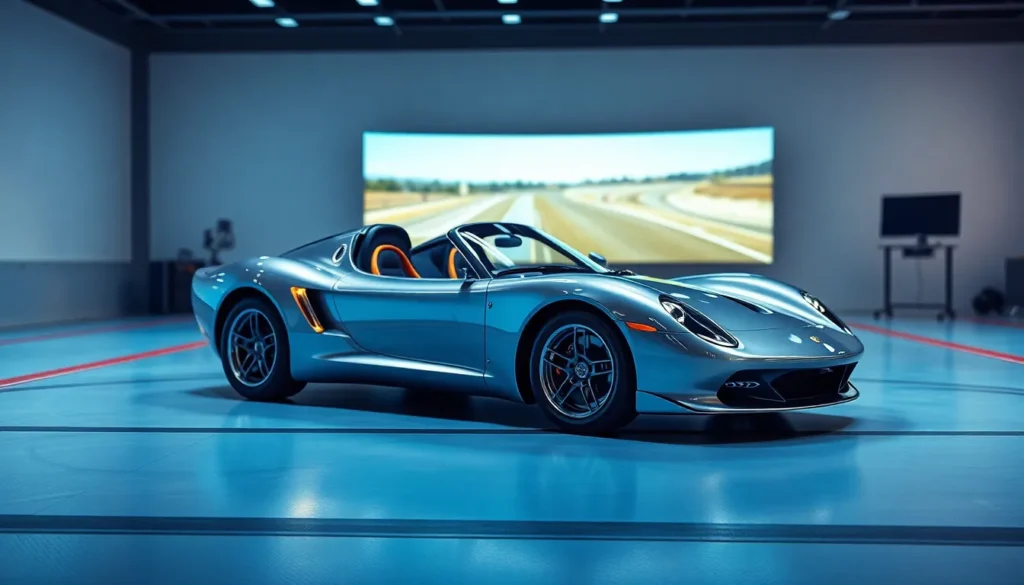
The franchise features hundreds of licensed vehicles from manufacturers worldwide. Gran Turismo 7, released in 2022, launched with over 400 cars and has added more through updates. Players can drive everything from a 1966 Volkswagen Beetle to a modern Formula 1-style race car. Each vehicle handles uniquely based on its real-world specifications.
Detailed Track Selection
Gran Turismo includes both real-world circuits and fictional tracks. Famous locations like the Nürburgring, Laguna Seca, and Suzuka Circuit appear alongside original designs. The series recreates real tracks with remarkable accuracy. Polyphony Digital has used laser scanning technology to capture every bump and elevation change.
Campaign and License System
Players progress through Gran Turismo by earning driving licenses. These tests teach fundamental skills: braking points, racing lines, overtaking techniques. The campaign mode builds from beginner events to high-stakes endurance races. This structure rewards patience and improvement.
Customization and Tuning
Gran Turismo allows deep mechanical customization. Players adjust suspension settings, gear ratios, brake balance, and aerodynamics. A properly tuned car can shave seconds off lap times. The photo mode and livery editor let players capture and personalize their vehicles.
The Evolution of Gran Turismo Games
The Gran Turismo franchise has grown dramatically since its 1997 debut.
The PlayStation Era (1997–2001)
The original Gran Turismo sold over 10 million copies and proved console racing games could be serious simulations. Gran Turismo 2 followed in 1999 with an expanded car list and two separate game discs, one for arcade mode and one for simulation mode.
PlayStation 2 Refinement (2001–2006)
Gran Turismo 3: A-Spec arrived in 2001 as a PS2 launch title. It showcased the console’s graphical power with dramatically improved visuals. Gran Turismo 4, released in 2004, introduced online features and photo mode. Many fans consider GT4 the series’ peak on PS2.
The HD Generation (2010–2017)
Gran Turismo 5 brought the franchise to PlayStation 3 after years of delays. It introduced dynamic weather and a day-night cycle. Gran Turismo 6 refined these systems and served as the final PS3 entry. Gran Turismo Sport (2017) shifted focus toward online competitive racing and esports integration.
Modern Gran Turismo (2022–Present)
Gran Turismo 7 returned to the traditional career structure while incorporating modern features. The game launched on both PS4 and PS5, taking advantage of the PS5’s DualSense controller for haptic feedback. Players feel different road surfaces through the controller’s vibrations. Gran Turismo 7 continues receiving updates with new cars, tracks, and events.
Polyphony Digital has maintained a consistent development philosophy throughout this evolution. Each Gran Turismo game pushes technical boundaries while staying true to its simulation roots.
Why Gran Turismo Remains a Fan Favorite
Gran Turismo maintains a loyal fanbase for several reasons.
First, the series respects its audience. Gran Turismo doesn’t simplify driving to appeal to casual players. It expects players to learn, practice, and improve. That commitment to authenticity attracts car enthusiasts and serious racing fans.
Second, Gran Turismo serves as a gateway to motorsport. The GT Academy program, which ran from 2008 to 2016, turned virtual racers into professional drivers. Several winners competed in real endurance races, including the 24 Hours of Le Mans. No other racing game has produced this kind of crossover success.
Third, the presentation quality remains exceptional. Gran Turismo games look stunning. The Scapes photo mode in GT7 produces images nearly indistinguishable from real photographs. Sound design has also improved significantly, with engine recordings captured from actual vehicles.
Fourth, Gran Turismo creates lasting memories. Players remember their first license test, their first endurance race win, or finally affording a dream car after hours of grinding. These moments build emotional connections that keep players returning.
The franchise also benefits from PlayStation exclusivity. Gran Turismo has become synonymous with the PlayStation brand, just as Forza represents Xbox. This relationship ensures continued development resources and marketing support.
Competition from Forza Motorsport and other simulators has pushed Gran Turismo to improve. Yet the series maintains its identity. It doesn’t chase trends or water down its simulation focus.