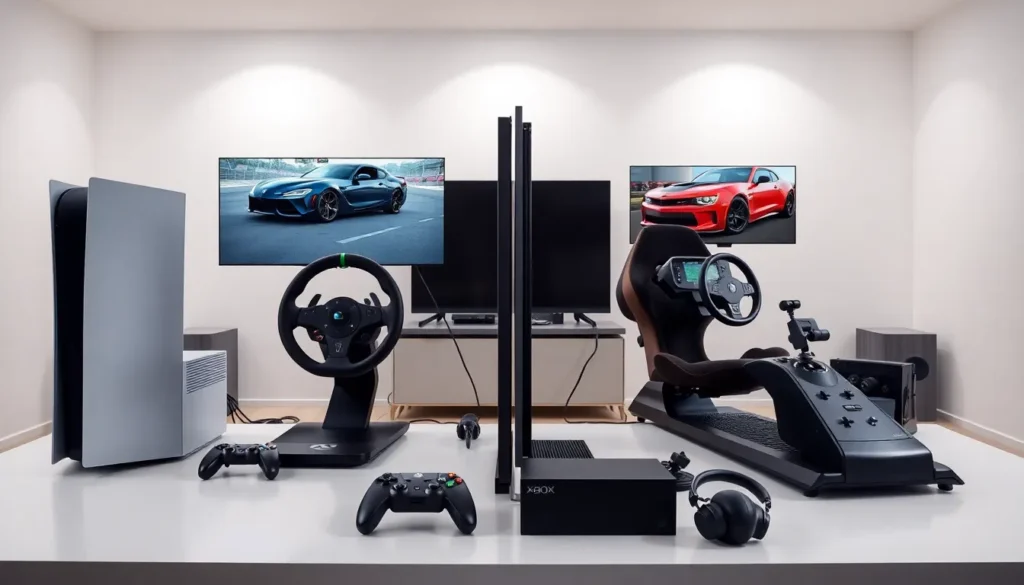

The Gran Turismo vs Forza debate has divided racing game fans for decades. Both franchises deliver authentic driving experiences, but they take different approaches to simulation racing. Gran Turismo remains a PlayStation exclusive with deep roots in Japanese car culture. Forza splits its identity between the simulation-focused Motorsport series and the open-world Horizon games on Xbox and PC.
So which franchise deserves a spot in your gaming library? This comparison breaks down the key differences in gameplay, car selection, graphics, online features, and value. Whether someone prioritizes realistic physics or casual fun, this guide helps identify the right choice.
Table of Contents
ToggleKey Takeaways
- Gran Turismo vs Forza comes down to platform loyalty for most players—Gran Turismo stays PlayStation-exclusive while Forza runs on Xbox and PC with Game Pass access.
- Gran Turismo delivers a purer simulation experience with realistic physics and a slower progression system, while Forza offers more accessibility and faster access to supercars.
- Forza leads in car variety and livery customization, but Gran Turismo excels at deep performance tuning for serious racing enthusiasts.
- Both franchises deliver nearly identical visual quality on current-gen hardware, with Gran Turismo slightly smoother during races and Forza showing more visual flair in replays.
- Gran Turismo’s FIA-sanctioned championships and structured competitive scene give it an edge for players seeking serious online racing.
- Forza Motorsport on Game Pass offers better value at $15/month versus Gran Turismo 7’s full $70 price tag with no subscription option.
Gameplay and Driving Physics Compared
Gran Turismo has built its reputation on realistic driving physics. The franchise treats itself as “The Real Driving Simulator,” and it shows. Cars in Gran Turismo 7 respond to weight transfer, tire temperature, and surface conditions with impressive accuracy. Players feel the difference between understeer and oversteer through precise controller feedback.
Forza Motorsport 2023 also delivers serious simulation credentials. Turn 10 Studios rebuilt the physics engine from scratch, adding tire and fuel degradation systems. The result feels more grounded than previous Forza entries. But, Forza tends to offer more accessibility options for casual players.
Here’s where Gran Turismo vs Forza really diverges: Gran Turismo demands patience. Its career mode starts players in slow hatchbacks and makes them earn faster machinery. Forza Motorsport lets players jump into supercars much earlier.
Both games support racing wheels and offer similar assist options. Gran Turismo edges ahead for players who want a pure simulation experience. Forza wins for those who prefer flexibility between arcade and sim handling.
Car Selection and Customization Options
Car enthusiasts care deeply about vehicle rosters. Gran Turismo 7 launched with over 420 cars and continues adding more through updates. The selection leans heavily toward Japanese manufacturers, with extensive Toyota, Nissan, and Honda lineups. European and American brands appear too, but JDM fans will feel most at home.
Forza Motorsport features around 500 cars at launch. The roster spreads more evenly across regions. American muscle cars, European exotics, and Japanese tuners all get solid representation.
Customization reveals another Gran Turismo vs Forza distinction. Forza offers deep visual customization through its livery editor. Players create intricate designs and share them online. Performance upgrades follow a straightforward parts-swapping system.
Gran Turismo takes a more conservative approach to visual mods. The livery editor exists but feels less flexible than Forza’s toolset. But, Gran Turismo excels at performance tuning. Players adjust suspension geometry, gear ratios, and differential settings with granular control. Serious tuners appreciate this depth.
Neither game allows significant body modifications like widebody kits on most vehicles. Both franchises prioritize factory aesthetics over wild customization.
Graphics and Visual Fidelity
Gran Turismo vs Forza comparisons always spark graphics debates. Both franchises push their respective hardware to the limit.
Gran Turismo 7 on PlayStation 5 delivers stunning car models. Polyphony Digital obsesses over details like interior stitching and paint reflection. The game’s Scapes photo mode showcases this attention with real-world backgrounds. Weather effects and time-of-day transitions look excellent.
Forza Motorsport on Xbox Series X matches this quality. Turn 10’s ray-traced reflections and dynamic lighting create beautiful visuals. Track environments show more variety than Gran Turismo’s somewhat sterile presentation.
Frame rate matters for racing games. Both titles target 60fps in performance modes and offer quality modes with enhanced visuals at lower frame rates. Gran Turismo feels slightly smoother during races. Forza shows more visual pop in replays and menus.
The honest assessment? These games look nearly identical to casual observers. Only side-by-side comparisons reveal meaningful differences. Both represent the best-looking racing games available today.
Online Features and Multiplayer Modes
Online racing separates casual players from committed enthusiasts. Gran Turismo vs Forza takes interesting directions here.
Gran Turismo Sport introduced a driver rating and sportsmanship rating system. Gran Turismo 7 continues this approach. Clean racers get matched with other clean racers. Dirty drivers end up in penalty lobbies. The system encourages fair competition and reduces frustration.
Forza Motorsport adopted a similar safety rating for its 2023 release. Both games now penalize corner-cutting and excessive contact. The implementations feel comparable in practice.
Gran Turismo hosts official FIA-sanctioned championships. These events carry real prestige in the sim racing community. Top Gran Turismo players have earned professional racing contracts. Forza lacks this direct motorsport connection.
Daily races in Gran Turismo keep the online population active. Players find competitive lobbies at most hours. Forza Motorsport’s multiplayer population varies more depending on game age and updates.
Both games suffer from occasional connection issues and matchmaking delays. Neither delivers a perfect online experience, but Gran Turismo’s structured competitive scene gives it an edge for serious racers.
Platform Availability and Value
Platform availability affects the Gran Turismo vs Forza decision for many buyers. Gran Turismo remains exclusive to PlayStation consoles. Gran Turismo 7 requires a PS4 or PS5. Sony shows no signs of bringing the franchise to other platforms.
Forza Motorsport runs on Xbox Series X
|
S and Windows PC. The game also appears on Xbox Game Pass from day one. This subscription option dramatically changes the value proposition. Players can access Forza Motorsport for around $15 per month instead of paying $70 upfront.
Gran Turismo 7 costs full price with no subscription alternative. Sony also received criticism for aggressive microtransaction pricing at launch. Earning in-game credits felt slow without spending real money. Patches improved the economy, but the initial reception hurt the game’s reputation.
Forza Motorsport includes microtransactions too, though the Game Pass inclusion softens the blow. Players who already subscribe get significant value.
The platform question often answers itself. PlayStation owners choose Gran Turismo. Xbox and PC players choose Forza. Only those with access to multiple platforms face a real decision.