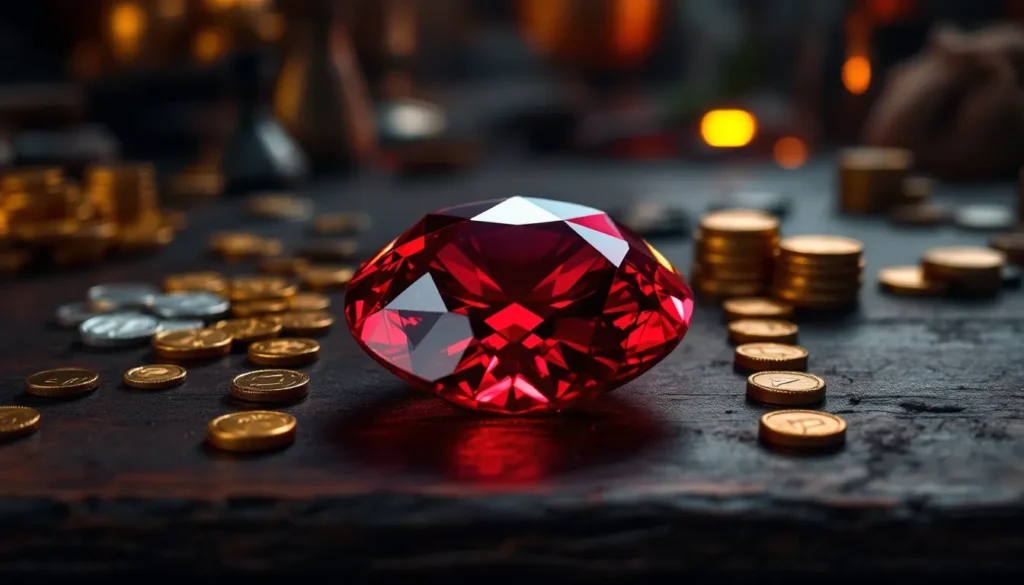

The sparkle of a Flawless Ruby in Skyrim might not seem like much at first, just another shiny rock tucked away in a dungeon chest or buried in a mine. But for players who understand the economy of Tamriel, these crimson gems represent one of the most efficient paths to wealth, smithing mastery, and speech leveling in the game. Whether someone’s looking to craft high-value jewelry, grind their way to smithing level 100, or simply pad their coin purse with thousands of gold, flawless rubies are essential components of several endgame strategies.
Unlike common gems that clutter inventory slots, flawless rubies hold exceptional crafting potential and sell for impressive prices. They’re rarer than their flawed counterparts but far more abundant than most players realize once they know where to look. From transmuting iron ore into gold and ruby ore to exploiting respawning mining veins and utilizing the Prowler’s Profit perk, Skyrim offers multiple paths to building a substantial gem collection. This guide breaks down every method for finding, farming, and maximizing profit from flawless rubies across all versions of the game.
Table of Contents
ToggleKey Takeaways
- Flawless rubies are one of Skyrim’s most efficient wealth-building tools, worth 250 gold base value but generating 2,000+ gold when enchanted and sold as jewelry.
- Craft flawless rubies into jewelry at any forge using just one silver or gold ingot, instantly doubling their value before enchanting for maximum profit.
- The Transmute Ore spell converts abundant iron ore into gold ore with a 33% gem yield rate, making it the single most powerful flawless ruby farming method in the game.
- Completing the Thieves Guild quest ‘No Stone Unturned’ unlocks Prowler’s Profit, dramatically increasing flawless gem drops in every container and dungeon chest.
- Combine smithing, enchanting, and speech leveling simultaneously by crafting ruby jewelry, enchanting it with high-value spells, and selling to multiple merchants for massive experience gains.
- Avoid the critical mistake of selling raw flawless rubies—instead craft them into jewelry first to increase profit potential from 250 gold to 520+ gold with minimal effort.
What Is a Flawless Ruby in Skyrim?
A Flawless Ruby is a high-quality gemstone categorized as a miscellaneous item in Skyrim’s inventory system. It weighs 0.1 units and has a base value of 250 gold, making it one of the more valuable unenchanted items players can carry in bulk. The ruby appears as a deep red crystalline stone and serves primarily as a crafting material for jewelry at smelters and forges throughout the province.
Flawless rubies differ from regular rubies in both rarity and value. While standard rubies are worth only 50 gold and appear more frequently in loot tables, flawless variants provide five times the base value and produce correspondingly more valuable jewelry when crafted. The game treats flawless gems as separate items entirely, not as upgraded versions of their flawed counterparts.
Players can obtain flawless rubies through mining ruby ore veins (which yield rubies of varying quality when smelted), looting containers throughout Skyrim, purchasing from merchants, or transmuting other ore types using specific spells. The gem’s versatility makes it valuable for multiple character builds, from merchants focused on speech leveling to smiths grinding their crafting skills.
Why Flawless Rubies Are Valuable
The true worth of flawless rubies extends beyond their 250 gold base price. When crafted into jewelry at a forge, a single flawless ruby becomes a Ruby Necklace (base value 520 gold) or Ruby Ring (base value 490 gold). This immediate doubling of value makes gems far more profitable than selling them raw.
Enchanting that same ruby jewelry multiplies its worth exponentially. A ruby necklace enchanted with Fortify Magicka can sell for 2,000+ gold depending on the enchantment’s magnitude and the player’s speech level. This three-step process, obtain gem, craft jewelry, apply enchantment, creates one of the most reliable gold-farming loops in the game.
Flawless rubies also provide exceptional smithing experience relative to their weight and material cost. Crafting jewelry requires only a single gem and one silver ingot or gold ingot, both of which are lightweight and readily available. Players serious about reaching smithing level 100 often rely on mass jewelry crafting, and essential techniques for power leveling include stockpiling flawless gems of all types. The combination of high value, low weight, and significant XP gain makes flawless rubies essential for efficient character progression.
Where to Find Flawless Rubies in Skyrim
Flawless rubies appear throughout Skyrim’s world in predictable patterns once players understand the game’s loot distribution system. Unlike unique artifacts with fixed locations, gems populate according to leveled lists and container types, meaning the same chest might contain different gems across multiple playthroughs. But, certain locations and methods consistently yield higher gem quantities.
Mining Locations for Ruby Ore
Ruby ore veins scatter across Skyrim’s landscape, primarily in mountainous regions and specific mine interiors. When mined, each vein provides 1-3 pieces of ruby ore, which smelts into a single ruby, either flawed or flawless, determined randomly during the smelting process. The game doesn’t distinguish between ore qualities: the randomization happens when converting ore to gems.
Key mining locations include:
- Broken Oar Grotto: Contains one ruby ore vein in the cave system west of Solitude
- Redwater Den: Features multiple ruby ore veins in the vampire-infested skooma den added in the Dawnguard DLC
- Korvanjund: The ancient Nord ruin contains at least one ruby vein in its deeper chambers
- Sunderstone Gorge: This necromancer lair southeast of Bloated Man’s Grotto has ruby veins alongside other ore types
- Lost Knife Hideout: The bandit cave near the Reach contains ruby ore veins
Mining ruby ore directly provides inconsistent flawless gem yields since the quality randomizes during smelting. For this reason, experienced players often prioritize transmutation methods over raw mining when specifically farming flawless rubies.
Looting Flawless Rubies from Dungeons and Chests
High-level containers in dungeons, bandit camps, and Dwemer ruins offer the most reliable method for finding pre-made flawless rubies. The game’s leveled loot system increases the likelihood of flawless gems appearing in higher-tier chests, particularly boss chests at dungeon conclusions and containers in areas scaled to higher player levels.
Exceptional looting locations include:
- Ansilvund: The final chamber’s boss chest frequently contains flawless gems
- Shroud Hearth Barrow: The Nordic ruin near Ivarstead has multiple high-level containers
- Forelhost: This challenging dungeon in the Rift contains numerous boss-tier chests
- Dwemer ruins generally: Locations like Nchuand-Zel, Mzinchaleft, and Alftand feature Dwemer containers with improved gem drop rates
- Dragon Priest lairs: Any location featuring a Dragon Priest mask drops exceptional loot, including flawless gems
Players should note that gem types in containers randomize, so flawless rubies compete with diamonds, emeralds, and sapphires in loot pools. According to comprehensive loot analysis from Game8, high-level chests have approximately a 15-20% chance of containing any given flawless gem type.
Pickpocketing and Stealing Opportunities
Certain NPCs carry flawless gems in their inventories, making them targets for thieves with high pickpocketing skills. This method proves less reliable than dungeon crawling but offers unique opportunities during specific quests or when visiting holds.
Notable pickpocketing targets include:
- Court wizards: These mages occasionally carry flawless gems as crafting materials
- Wealthy merchants: High-level traders in major cities sometimes have gems in their personal inventories separate from their merchant stock
- Jarl’s stewards: These officials occasionally carry valuables including flawless gems
The Prowler’s Profit perk (discussed in detail later) doesn’t affect NPC inventories, only containers, so pickpocketing remains independent of that bonus. Players investing in the pickpocketing skill tree can grab gems without alerting guards, though the random nature of NPC inventories makes this an opportunistic method rather than a farming strategy.
Merchants Who Sell Flawless Rubies
Several merchant types stock flawless gems in their regular inventories, though availability varies based on merchant level and player progression. Gem merchants and general goods traders provide the most consistent sources, while court wizards occasionally stock them alongside soul gems and alchemical ingredients.
Reliable merchant sources include:
- Fralia Gray-Mane (Whiterun): Her general goods store sometimes stocks flawless rubies
- Radiant Raiment (Solitude): The clothing shop occasionally carries gems for jewelry crafting
- Khajiit Caravans: All three roaming caravans include general goods merchants who may stock flawless gems
- Madesi (Riften): The Argonian jeweler in the Riften marketplace stocks various gems
- Kerah (Markarth): Found inside the Silver-Blood Inn, she’s a roving merchant with gem inventory
Merchant inventories reset every 48 in-game hours, allowing players to repeatedly purchase from the same vendors. But, buying gems proves expensive at 250 gold per flawless ruby, making it suitable only for players with substantial capital or those who need specific quantities for immediate crafting projects.
Best Uses for Flawless Rubies
Raw flawless rubies sitting in inventory represent unrealized potential. The real value emerges when players channel these gems through Skyrim’s crafting and economic systems. Three primary strategies dominate: jewelry crafting for smithing XP, enchanting for maximum sale value, and direct selling when capital is needed immediately.
Crafting Jewelry with Flawless Rubies
At any forge or jeweler’s workbench, players with a single silver ingot or gold ingot can craft ruby jewelry. The options include:
- Ruby Ring: Requires 1 flawless ruby + 1 silver ingot: base value 490 gold: grants minimal smithing XP
- Ruby Necklace: Requires 1 flawless ruby + 1 gold ingot: base value 520 gold: grants slightly more smithing XP than rings
The smithing experience gained from jewelry crafting scales with the item’s base value, making ruby necklaces marginally more efficient for leveling purposes. But, silver ingots are more abundant than gold ingots in most playthroughs, so players often craft ruby rings purely based on material availability.
Crafted jewelry weighs 0.5 units each (regardless of ring or necklace), five times heavier than the raw gem. Players hauling jewelry for sale need to manage carrying capacity carefully, especially when mass-producing dozens of pieces during smithing grinds. The weight issue becomes less relevant for players using enchanting as their final step, since enchanted jewelry sells for enough gold that fewer pieces need transport.
One underappreciated aspect of ruby jewelry involves the aesthetic value for roleplaying characters. Ruby pieces complement certain armor sets visually, and players invested in their character’s appearance sometimes craft specific jewelry types for cosmetic reasons independent of economic optimization.
Enchanting Ruby Jewelry for Maximum Value
Enchanting transforms moderately valuable ruby jewelry into premium merchandise worth thousands of gold per piece. The process requires an enchanting table, filled soul gems, and learned enchantments. The enchantment type dramatically affects final sale price.
Optimal enchantments for ruby jewelry include:
- Fortify Magicka (necklaces): Popular among mages: sells for 1,500-2,500 gold depending on magnitude
- Fortify Sneak (rings and necklaces): High demand from stealth builds: similar value to Fortify Magicka
- Fortify Smithing (necklaces): Sought by crafters: commands premium prices from the right merchants
- Waterbreathing (any jewelry): Surprisingly valuable even though niche utility: often sells for 1,800+ gold
The enchantment magnitude directly correlates with sale price. Players should use grand souls (from mammoths, giants, or humanoids with grand soul gems) when enchanting for profit rather than petty or lesser souls. A ruby necklace with a 50-point Fortify Magicka enchantment might sell for 2,200 gold, while the same necklace with a 20-point enchantment brings only 900 gold.
Enchanting also provides substantial enchanting skill XP, creating a synergistic loop where players simultaneously level enchanting, smithing (from the crafting step), and speech (from selling the finished products). This triple-skill progression makes the gem-to-enchanted-jewelry pipeline one of the most efficient leveling strategies in advanced character builds.
Selling Flawless Rubies for Gold
Sometimes players need gold immediately and lack the smithing or enchanting infrastructure to process gems into jewelry. Selling raw flawless rubies remains viable, particularly in early-game scenarios when crafting skills remain low.
At 250 gold base value, flawless rubies sell for decent prices even without the speech perks that boost merchant transactions. Players with the Investor perk (speech level 70) can increase merchant gold reserves to 1,000+, making it easier to offload multiple gems in a single transaction.
Best merchants for selling raw gems include:
- General goods merchants: They accept all item types and usually have 750-1,000 gold
- Blacksmiths: Particularly receptive to crafting materials: good gold reserves
- Court wizards: Often have 750+ gold and thematically appropriate for gem sales
The Master Trader perk (speech level 100) allows selling any item type to any merchant, effectively eliminating merchant category restrictions. Players with this perk can unload gems on anyone with gold, including innkeepers, alchemists, and food vendors.
Selling raw gems makes economic sense only when the player lacks crafting skills or needs immediate liquidity for essential purchases like training, houses, or followers. According to player efficiency analysis from GameSpot, crafting then enchanting gems before selling generates 8-10x more gold than selling raw gems directly, though it requires time investment and skill development.
How to Farm Flawless Rubies Efficiently
Casual looting provides sporadic flawless ruby discoveries, but serious farmers need systematic approaches that generate dozens or hundreds of gems. Three methods dominate endgame gem farming: the Transmute Ore spell, the Prowler’s Profit perk from the Thieves Guild questline, and exploiting respawning resources through wait mechanics.
Transmute Ore Spell: Turning Iron into Gold and Rubies
The Transmute Mineral Ore spell represents the single most powerful gem-farming tool in Skyrim. This Alteration spell converts iron ore into silver ore, and silver ore into gold ore. When smelted, gold ore has an approximately 33% chance of yielding a ruby (flawed or flawless) rather than a standard gold ingot, effectively creating gems from the game’s most abundant ore type.
Players can find the Transmute spell tome in several locations:
- Halted Stream Camp: The most reliable source: this bandit camp north of Whiterun contains the spell tome on a table in the main chamber near the mammoth tusk excavation. The camp also features iron ore veins, providing immediate raw materials.
- Ansilvund: The spell tome occasionally appears in this dungeon as random loot
- Merchant random stock: Court wizards rarely stock the Transmute tome, though this method proves unreliable
The farming loop works as follows:
- Mine or purchase iron ore in bulk (many mines contain 10+ iron veins)
- Cast Transmute repeatedly until all ore converts to gold ore
- Smelt gold ore at any smelter
- Receive mix of gold ingots, rubies, and flawless rubies
- Craft jewelry, enchant, and sell
This method generates passive Alteration XP while converting worthless iron (base value 1 gold per ore) into valuable gold and gems. Players can level Alteration to 100 purely through transmutation if they process enough ore. The only limiting factor is the time required to cast the spell hundreds of times, though the economic return justifies the tedium for players focused on wealth accumulation.
One efficiency trick: binding Transmute to a hotkey allows rapid casting without repeatedly opening the magic menu. Players can transmute entire inventories of iron ore in minutes rather than constantly navigating menus.
Using the Prowler’s Profit Perk
Prowler’s Profit is a hidden perk awarded upon completing the Thieves Guild quest “No Stone Unturned,” which requires finding all 24 Unusual Gems (Stones of Barenziah) scattered across Skyrim. Once activated, this perk dramatically increases the number of gems found in containers throughout the game world.
With Prowler’s Profit active, nearly every chest, urn, burial urn, and boss container contains 2-8 gems of various qualities. Flawless gems appear alongside their flawed counterparts, creating a flood of crafting materials that trivializes the economic game. Players report finding 50+ flawless gems during a single dungeon crawl with the perk active.
The challenge lies in collecting all 24 stones, which requires extensive exploration across every hold and DLC area. Several stones are locked behind faction questlines or level-gated locations. Resources like detailed stone location guides provide map references and screenshots for each stone, making the collection process manageable with systematic exploration.
Prowler’s Profit doesn’t discriminate between gem types, it increases drops for diamonds, emeralds, sapphires, and amethysts equally. Players seeking specifically flawless rubies should combine this perk with high-volume dungeon runs through locations with multiple containers. Dwemer ruins prove particularly effective since they contain dozens of urns, chest, and Dwemer metal-filled containers that also trigger the perk.
Respawning Mining Locations and Loot
Skyrim’s respawn mechanics allow players to revisit cleared locations after 30 in-game days (10 days for cleared locations, 30 for ore veins and certain containers). This timer enables sustainable farming routes where players circuit through multiple gem-rich locations on a schedule.
Ore veins respawn independently of the location’s cleared status. A player can clear a mine’s enemies, mine all veins, then return 30 days later to find the veins repopulated regardless of whether enemies have respawned. This mechanic allows safe, repeated mining in previously cleared areas.
An efficient farming route includes:
- Mine all ruby veins at multiple locations (Broken Oar Grotto, Redwater Den, etc.)
- Clear high-value dungeons with boss chests (Ansilvund, Forelhost)
- Fast travel to a remote location and wait/sleep for 30 days
- Return to the same locations and repeat
The waiting mechanic is crucial. Players can rest at inns, sleep in owned houses, or use the wait function (default T key on PC) to advance time rapidly. Sleeping provides the rested XP bonus, making it slightly more efficient than raw waiting for players who also want to level skills during their farming sessions.
Container respawns function differently based on container type. Boss chests in dungeons respawn with randomized loot after 30 days, potentially containing different gem types on subsequent visits. Alchemy ingredient barrels and food crates respawn faster (3-10 days), but they rarely contain gems. Players should focus on high-tier containers for gem farming rather than general storage containers.
Leveling Smithing and Speech with Flawless Rubies
Flawless rubies serve dual purposes in skill progression systems. Their high value makes them exceptional tools for grinding both smithing (through jewelry crafting) and speech (through selling finished products). Players can reach level 100 in both skills using primarily gem-based methods, bypassing traditional approaches like forging daggers or brewing potions.
Power Leveling Smithing Through Jewelry Crafting
Smithing experience scales with the base value of crafted items. A ruby necklace worth 520 gold provides significantly more XP than an iron dagger worth 10 gold, even though both requiring similar crafting time. This value-to-XP ratio makes jewelry crafting the most efficient smithing leveling method for players with substantial gem reserves.
The math works as follows:
- Ruby necklace: 520 base value, grants approximately 52 smithing XP per craft
- Gold necklace (no gem): 300 base value, grants approximately 30 smithing XP
- Iron dagger: 10 base value, grants approximately 1 smithing XP
Crafting 100 ruby necklaces yields roughly 5,200 smithing XP, equivalent to 520 iron daggers but requiring only 100 flawless rubies and 100 gold ingots instead of 520 iron ingots and 260 leather strips. The material efficiency alone justifies the gem-based approach, and the additional benefit of creating valuable merchandise instead of vendor trash makes it doubly effective.
Players serious about smithing grinds should collect all flawless gem types, not just rubies, since emeralds, sapphires, and diamonds provide similar value ratios. Mixed gem collections ensure consistent crafting without waiting for specific gem spawns. The smithing optimization strategies used by speedrunners rely heavily on mass jewelry production during midgame progression.
One crucial detail: smithing XP gain isn’t affected by whether items are improved at grindstones or workbenches after creation. Jewelry can’t be improved at all, meaning players skip that entire upgrade step and still receive full XP benefits. This makes gems even more efficient than traditional smithing materials that require secondary improvement steps for maximum XP.
Maximizing Speech Experience Through Gem Sales
Speech levels through selling items, with experience gained based on the transaction’s total value. Selling a single enchanted ruby necklace worth 2,000 gold generates substantially more speech XP than selling 20 iron daggers worth 100 gold combined, even though the net gold is the same.
Optimal speech leveling through gems follows this pattern:
- Craft ruby jewelry from flawless rubies
- Enchant jewelry with high-value enchantments (Fortify Magicka, Waterbreathing)
- Sell individual pieces to merchants for maximum per-transaction value
- Reset merchant inventories by waiting 48 hours
- Repeat with new batches
The speech perk tree directly supports this strategy. Merchant (speech 50) allows selling any item type to general goods merchants, increasing available buyers. Investor (speech 70) boosts merchant gold to 1,000+, allowing larger single transactions. Master Trader (speech 100) removes all merchant category restrictions entirely.
Players combining smithing and speech leveling should craft jewelry in batches, enchant the entire batch, then tour multiple cities selling 2-4 pieces per merchant. This approach maximizes both smithing XP (from crafting) and speech XP (from high-value sales) while generating enough gold to fund additional training in other skills.
The synergy extends further when players use speech leveling to unlock merchant perks that make gem farming easier, specifically the Fence perk chain from the speech tree, which increases merchant gold reserves and allows selling stolen gems. Players who steal flawless rubies through dungeon looting can offload them to any merchant once appropriate perks activate.
Flawless Ruby vs. Other Precious Gems: Which Is Best?
Skyrim features five flawless gem types: rubies, sapphires, emeralds, diamonds, and amethysts. Each shares identical weight (0.1) and similar applications in jewelry crafting, but they differ in base value and relative abundance. Understanding these differences helps players prioritize which gems to farm and stockpile.
Base value comparison:
- Flawless Diamond: 500 gold (highest)
- Flawless Emerald: 500 gold (tied)
- Flawless Sapphire: 500 gold (tied)
- Flawless Ruby: 250 gold
- Flawless Amethyst: 250 gold (tied)
At first glance, diamonds, emeralds, and sapphires appear superior to rubies since they’re worth double the base price. But, the three 500-gold gems are significantly rarer in loot tables and ore veins. Rubies spawn more frequently, making them easier to accumulate in large quantities even though their lower individual value.
For smithing leveling purposes, the higher-value gems provide more XP per craft. A diamond necklace (base value 1,020 gold) grants nearly double the smithing XP of a ruby necklace (520 gold). Players with mixed gem collections should prioritize crafting with diamonds, emeralds, and sapphires first, saving rubies and amethysts for when premium gems run out.
The enchanting meta doesn’t distinguish between gem types, enchantment value depends on the enchantment itself and the soul used, not the underlying jewelry material. A ruby necklace and diamond necklace both sell for approximately 2,000 gold when enchanted with identical Fortify Magicka effects, meaning the base gem value becomes irrelevant after enchanting.
This creates an interesting strategic choice: players focused on enchanting should farm rubies (more abundant) since final sale prices equalize after enchantment, while players focused on smithing XP should prioritize diamonds and emeralds for maximum experience per craft.
One underappreciated aspect involves carrying capacity. Since all gems weigh 0.1 units regardless of value, flawless diamonds provide 2x value per weight unit compared to rubies. For players with limited carrying capacity during dungeon runs, prioritizing diamond collection over ruby collection makes sense. But, this concern evaporates for players using followers, pack animal mods, or inventory management techniques that bypass weight limits.
Amethysts occupy a strange middle ground. They share rubies’ 250 gold base value but appear less frequently in loot tables, making them strictly worse than rubies for farming purposes. Most experienced players ignore amethysts entirely unless they randomly appear during normal gameplay.
Common Mistakes to Avoid When Hunting Flawless Rubies
Even experienced players make avoidable errors when farming gems. These mistakes range from inefficient crafting sequences to poor merchant management, all of which reduce gold-per-hour rates and waste valuable materials.
Selling gems raw instead of crafting first. This might be the single biggest mistake. A flawless ruby sells for 250 gold, but a ruby necklace sells for 520 gold using just one additional gold ingot worth 100 gold. The instant doubling of profit takes seconds at any forge. Players selling raw gems leave hundreds of thousands of gold on the table across a full playthrough.
Ignoring the Transmute Ore spell. Halted Stream Camp sits practically next to Whiterun, one of the first major cities most players visit. Even though this, many players never pick up the Transmute tome, missing out on the game’s most reliable gem generation method. The spell requires only Alteration 0 (no skill requirement) and costs trivial magicka, making it universally accessible.
Not pursuing Prowler’s Profit. The “No Stone Unturned” quest provides arguably the strongest economic perk in the game, yet completion rates hover around 10% according to achievement tracking. Players intimidated by collecting 24 scattered items often skip the quest entirely, permanently gimping their gem income. Using an online guide reduces collection time to 2-3 hours, a small investment for permanent exponential loot increases.
Enchanting with weak souls. Petty and lesser soul gems are abundant and tempting to use when enchanting jewelry. But, the enchantment magnitude directly affects sale price, and weak souls produce weak enchantments. Players should reserve grand and greater souls for profit-focused enchanting, using petty souls only for leveling enchanting skill through volume crafting.
Poor merchant route planning. Many players craft 20 pieces of enchanted ruby jewelry, fast travel to one city, sell 2-3 pieces to the local blacksmith, then wonder what to do with the other 17. Efficient farming requires visiting 5-10 merchants per selling session, rotating through Whiterun, Solitude, Windhelm, Riften, and Markarth to distribute merchandise. The Investor perk makes this strategy even more effective by increasing each merchant’s available gold.
Over-prioritizing rubies vs. mixed gem collecting. New players sometimes fixate on a single gem type, rejecting sapphires and emeralds because their guide focuses on rubies. In practice, all flawless gems serve essentially identical purposes. Collectors should grab every flawless gem they encounter regardless of type, then craft based on available materials rather than waiting for specific ruby spawns.
Neglecting Dwemer ruins. These sprawling dungeons contain dozens of urns, containers, and chests that all trigger Prowler’s Profit. Many players avoid them due to Dwemer Sphere and Centurion difficulty, but high-level characters clear these ruins in 20-30 minutes while collecting 30+ flawless gems per run. The risk-to-reward ratio heavily favors Dwemer exploration for gem farming.
Forgetting respawn timers. Players sometimes return to cleared mines after 10-15 days, find no ore veins, and assume the location doesn’t respawn. The actual timer is 30 in-game days for ore veins, and many players underestimate how much game time they’ve actually spent. Keeping a manual log of cleared locations and visit dates prevents wasted fast travel and ensures efficient respawn farming.
Conclusion
Flawless rubies represent far more than shiny loot in Skyrim’s economic ecosystem. They’re key components in efficient smithing progression, reliable income sources through enchanted jewelry sales, and surprisingly powerful tools for speech leveling. Players who understand gem farming mechanics, particularly the Transmute Ore spell and Prowler’s Profit perk, gain access to effectively unlimited wealth and crafting materials.
The beauty of the ruby farming loop lies in its scalability. Beginners can pick up individual gems during dungeon runs and gradually build small reserves for occasional jewelry crafting. Advanced players systematically clear respawning locations on 30-day cycles while transmuting hundreds of iron ore pieces, generating thousands of gold per hour. Both approaches work within Skyrim’s flexible progression systems.
Whether someone’s pushing toward smithing 100, funding a new house purchase, or simply enjoying the satisfaction of a well-stocked gem collection, flawless rubies deliver measurable results. The crimson gems might not have the prestige of unique artifacts or legendary weapons, but they provide consistent value that compounds across hundreds of hours of gameplay. And in a game as sprawling as Skyrim, that reliability matters more than occasional spectacular drops.